
 La coopération au cœur de la Méditerranée
GREEN BAY: the new environmental certification
designed by ports, for ports
Anticipate tomorrow’s requirements, showcase what you do today.
6 impact families

Waste
6 criteria

Pollution
8 criteria

Resources
2 criteria

Climate & Biodiversity
2 criteria
People
5 criteria

Governance & Transparency
2 criteria

01 / 08
The GREEN BAY
certification is:
An environmental reference framework designed by and for passenger terminals
A practical steering tool to speed up the ecological transition with your partners
An independent certification, recognised and issued by an accredited body (AFNOR Certification)
A way to anticipate upcoming regulations
Savings through better control of resources
A visible commitment towards your partners, users and neighbours
02 / 08
The observation
Expectations on environmental performance are rising.
For passenger terminals, it is becoming essential to have a clear framework to steer, measure and showcase their actions.
The GREEN BAY environmental certification was created to meet these challenges.
03 / 08
25 criteria,
6 families
A reference framework written by port operators, for passenger terminals. Each criterion carries guidelines and a verifiable requirement — which is what makes it auditable by a third party.
Waste
6 criteria
Waste from ships, passengers and the operator, single-use plastics, dredged sediments, ship sewage
- 01 Ship waste reception and handling plan
- 02 Passenger waste at the terminal
- 03 Ship-generated waste (MARPOL I and V)
- 04 Waste of the operator and its contractors
- 05 Dredged sediments
- 06 Ship sewage (MARPOL IV)
Pollution
8 criteria
Discharges at berth, run-off water, bunkering, air quality, noise, sanitary and pollution-response equipment
- 07 Ship maintenance at berth
- 08 Rainwater and run-off from the yards
- 09 Fuel bunkering
- 10 Obsolete equipment
- 11 Air quality
- 12 Noise pollution
- 13 Sanitary facilities
- 14 Pollution-response equipment and accidental pollution
Resources
2 criteria
Monitoring and reduction of water and energy consumption, alternative sources and renewable energy on the port estate
- 15 Water consumption control
- 16 Energy consumption control
Climate & Biodiversity
2 criteria
Measuring and reducing greenhouse gas emissions, protecting and restoring land and marine biodiversity
- 17 Measuring and reducing greenhouse gas emissions
- 18 Land and marine biodiversity
People
5 criteria
Staff training, awareness of temporary and seasonal staff, internal communication, information of users and port operators
- 19 Training of port staff
- 20 Awareness of temporary and seasonal staff
- 21 Internal communication
- 22 Information and awareness of users, feedback handling
- 23 Information and awareness of port operators
Governance & Transparency
2 criteria
Annual review shared with stakeholders, action plan with schedule, responsibilities and resources, monitoring indicators
- 24 Annual review
- 25 Environmental action plan
One criterion, in full
Reference
Criterion 11 · Pollution
Criterion
Air quality
Requirement
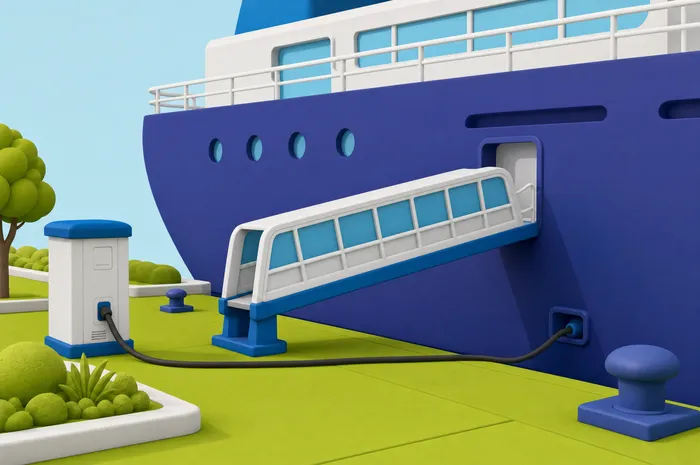
Where the diagnostic study recommends it, the operator knows the impact of port activity on air quality and implements reduction measures: its own equipment, the vehicles of waiting passengers, ships at berth
Guidelines
Where shore-side electricity exists, it is required for connectable ships on calls longer than two hours; berths are allocated in priority to the lowest-emitting ships; during a pollution episode, users and operators are informed and encouraged to act.
Verified on documents and on site by an accredited independent auditor
04 / 08
The process,
in 4 steps
Length of the certification cycle
3
years




Reference framework AFNOR SPEC 2407 · certification issued by AFNOR Certification
05 / 08
Why
commit?
- Reduce your environmental footprint for good
- Anticipate tomorrow’s requirements
- Gain recognition and credibility
- Strengthen your appeal to shipping lines and users
- Optimise your consumption and your costs
- Foster the acceptance of your activity
- Benefit from an independent certification and a European reference framework
06 / 08
Frequently
asked questions
Who can be certified?
Every European sea, river or lake port that welcomes passengers can be GREEN BAY certified.
How long does the process take?
Once the process has started, the port can choose to be audited at any time. When the certification is validated by the auditor, a yearly surveillance audit takes place during the 3-year validity cycle.
Who carries out the audits?
An accredited independent auditor carries out the audit over several days.
Is the certification recognised in Europe?
Yes, the GREEN BAY certification is recognised and can be showcased across Europe.
How much does it cost?
The certification is estimated at €3,500 per year and per terminal. Once obtained, it is valid for a 3-year cycle.
Can a port already certified ISO 14001 apply?
Yes. The GREEN BAY certification is specifically dedicated to passenger terminals, and remains compatible with other environmental certification schemes such as ISO 14001.
What is the difference with ISO 14001?
ISO 14001 structures and certifies an organisation’s environmental management system. GREEN BAY assesses and rewards the actions implemented and the environmental performance of the terminal in its port context.
Can the certification be renewed?
Once validated, the certification is valid for 3 years. At the end of the cycle, a new audit is carried out to renew it.
How is it different from Ports Propres?
The Ports Propres certification is dedicated to marinas. GREEN BAY is exclusively devoted to sea, river and lake passenger ports.
07 / 08
The ports
of the project
Several ports are already engaged in the certification process.
Register of ports07
List of ports
- Port website: Ajaccio
- Port website: Bastia
- Port website: La Spezia
- Port website: Livorno
- Port website: Marina di Carrara
- Port website: Piombino
- Port website: Toulon-La Seyne
The map of ports is displayed here.
08 / 08
Join the environmental transition
Your application is filed with AFNOR Certification, the only body authorised to audit and issue the certification. The GREEN BAY team supports you beforehand, answering your questions and helping you prepare that step.
News
-
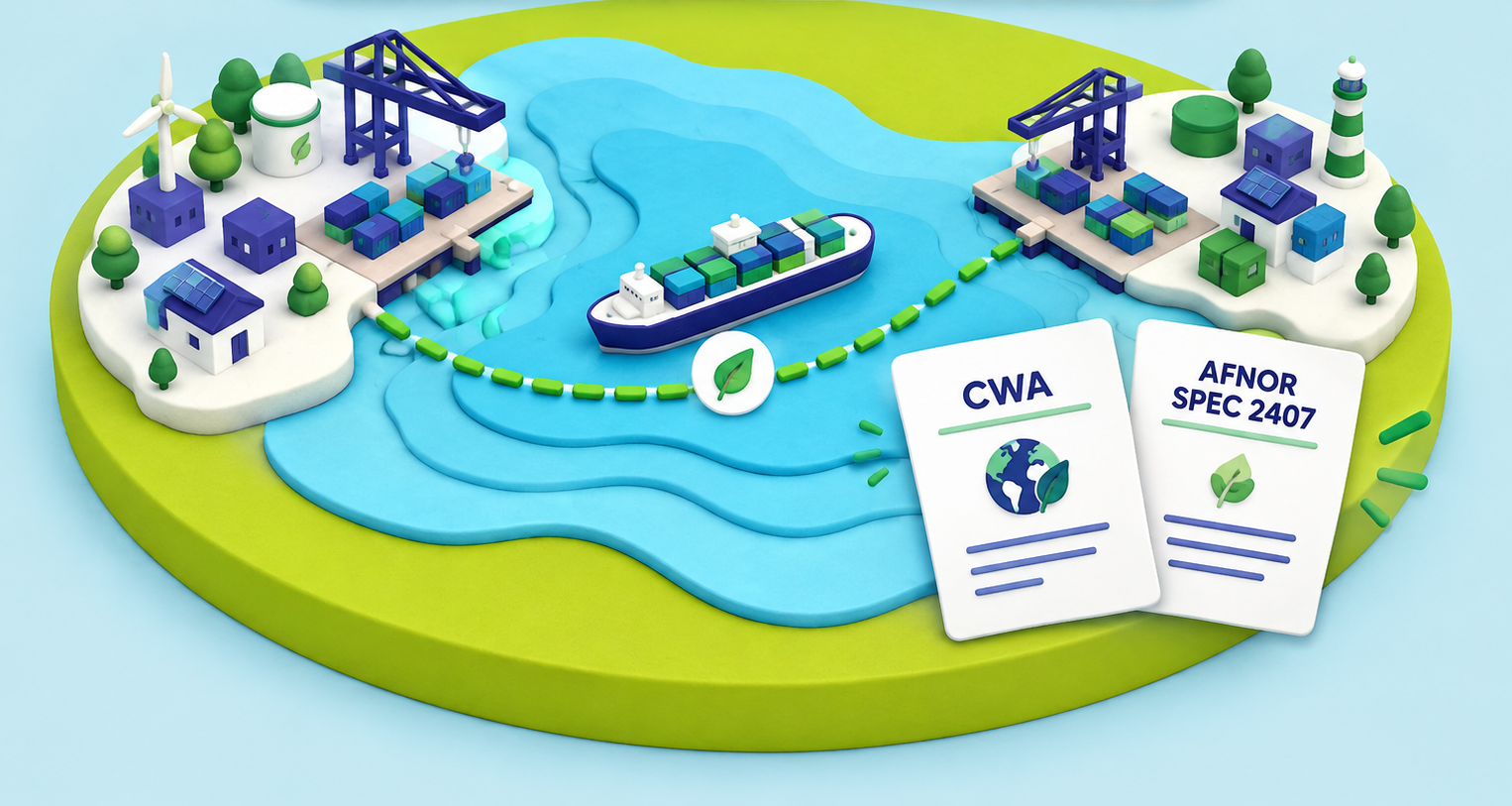
Green transition of ports: the CWA and AFNOR SPEC 2407 are published
The GREEN BAY project reaches a decisive milestone for the future of passenger port terminals. The European CWA (CEN Workshop Agreement) and the AFNOR SPEC 2407 guidelines have…
-
GREEN BAY: the European environmental reference framework for passenger terminals takes a new step towards the international stage
Working groups open to every European port are being set up by AFNOR and CEN to draw up a European environmental reference framework, as a CEN Workshop Agreement…